
5 Ways to Talk to Your Family About a Serious Diagnosis

Clinicians are trained to deliver a diagnosis. Patients rarely get the equivalent training in relaying it to the people who love them. Between the consultation room and the dinner table, there is a conversation that no textbook prepares anyone for, and it often carries as much weight as the diagnosis itself.
The following five approaches, drawn from how patient counselors, oncology nurses, and specialty care coordinators commonly guide these conversations, offer a practical answer to how to talk to family about a serious diagnosis. They are written for patients directly, and equally for the physicians, pharmacists, and support staff who are often the first to be asked this question.
1. Process Before You Share
A patient does not need to have every emotion resolved before speaking to family, but a short period of reflection tends to change the tone of the conversation for the better. Writing down what is actually known about the condition, what remains uncertain, and what kind of support would help most gives structure to a conversation that might otherwise unfold reactively.
Care teams can support this step directly by offering a brief written summary at the time of diagnosis, something a patient can refer back to rather than relying on memory alone during an emotionally charged moment.
2. Choose the Setting Deliberately
Where and how a diagnosis is shared shapes how it is received. A quiet setting without interruptions generally works better than a rushed exchange between errands or during a larger family gathering.
Some patients choose to inform one close relative first and rely on that person to help relay the news to others. Others prefer to gather immediate family at once, reducing the risk of the message being diluted or altered as it passes between people. Neither approach is inherently better; the right choice depends on family structure and the patient's own comfort.
3. Lead With Clarity, Not Completeness
The first conversation rarely needs to cover every clinical detail. Overloading family members with terminology at the outset tends to overwhelm rather than inform. A serious diagnosis is difficult enough to absorb in a single sitting without the added weight of technical vocabulary borrowed directly from a consultation note.
A more effective approach states the diagnosis plainly, outlines the immediate next steps, and leaves room for questions to guide the depth of the discussion from there. Patients who rehearse a short, simple explanation beforehand, almost as a prepared statement, generally find the actual conversation easier to navigate.
4. Be Specific About What Would Help
Family members frequently want to help but are unsure how. Vague reassurances such as "let me know if you need anything" often go unused, whereas specific requests tend to translate into real support.
Some patients need logistical help, transport to appointments or assistance with daily tasks during treatment. Others need someone simply to listen without offering solutions. Others still need space to process privately before engaging further. Naming these needs directly, even when it feels uncomfortable, gives family members a clear and actionable way to contribute.
It is also reasonable for these needs to shift over the course of treatment. What helps in the first weeks after diagnosis often looks different several months in, and revisiting the conversation periodically keeps support aligned with the patient's actual situation. Much of what falls under supporting a family member with chronic illness is exactly this kind of ongoing recalibration rather than a single conversation that settles the matter once and for all.
5. Expect a Range of Reactions
Family members process difficult news differently, and there is rarely a single correct response. Some react immediately with visible emotion. Some go quiet and only process the weight of it later. Others ask a rapid succession of questions as a way of regaining a sense of control. None of these reactions reflect a lack of care.
Patients are entitled to pace this conversation according to their own emotional capacity, pausing where needed and returning to certain topics once everyone involved has had time to absorb the initial news. This is rarely a single conversation so much as the beginning of an ongoing one, and treating it that way tends to reduce pressure on all sides.
Where family dynamics are particularly strained, involving a counselor or a patient support coordinator, many specialty hospitals now maintain dedicated roles for this, can ease conversations that feel too difficult to navigate alone.
Coordinated Support Beyond the Consultation Room
Coping with serious illness is rarely a task for the patient in isolation. Physicians set the clinical course, but the surrounding structure, family communication, pharmacist counseling, and patient support programs run by specialty manufacturers, often determines how well that clinical plan is actually followed at home.
Companies operating in specialty healthcare, Neovae Biomedics among them, typically build patient support material with exactly this gap in mind, recognizing that a prescription alone rarely accounts for the family conversations that surround it. Neovae patient support resources, in particular, are designed to sit alongside these conversations rather than replace them, giving families a reference point once the initial discussion has taken place.
Frequently Asked Questions

A Practical Guide to Uses, Benefits and Buying of Polycarb Tablet
Iron deficiency anaemia is the most commonly diagnosed nutritional disorder in women, especially during their reproducti...
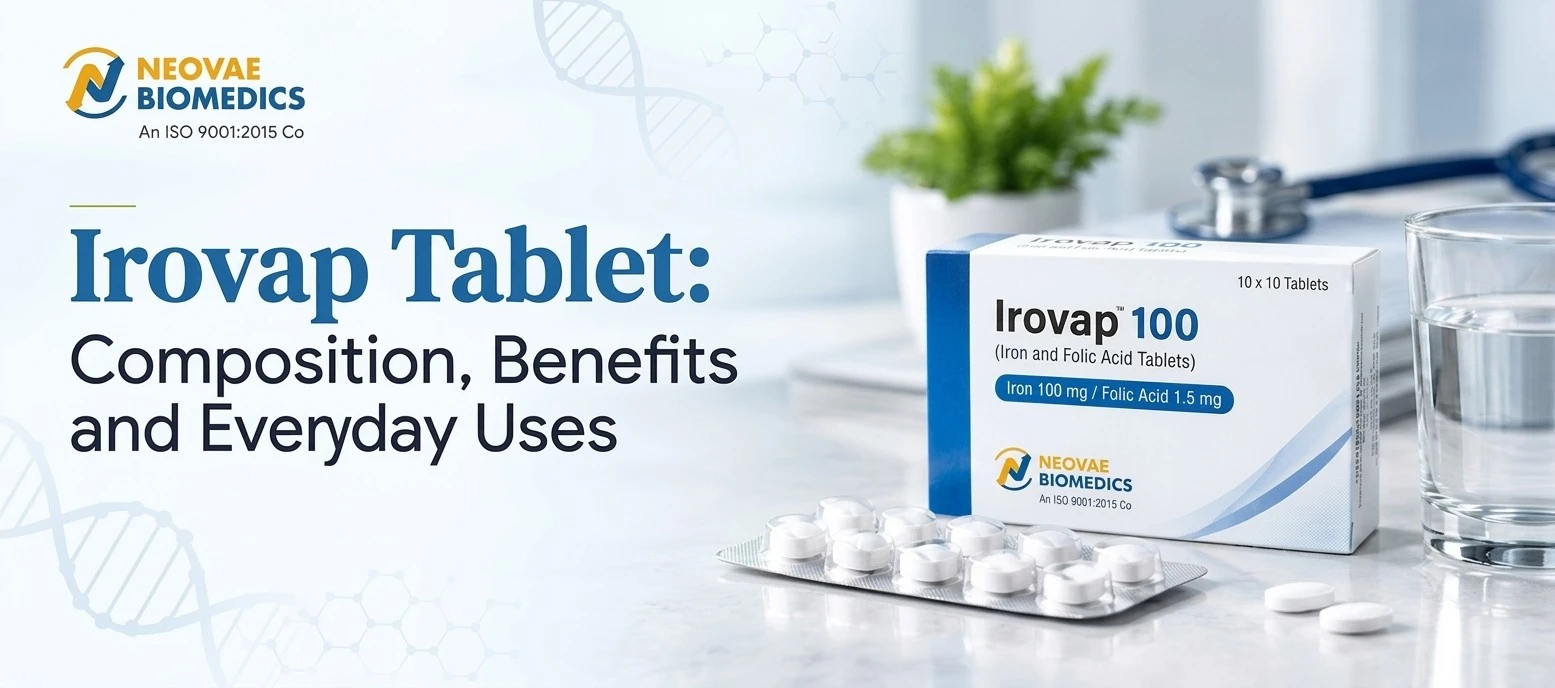
Irovap Tablet: Composition, Benefits and Everyday Uses
Iron deficiency is one of the most common nutritional deficiencies that we see in clinical practice, whether it occurs i...

Carnivap 300: A Complete Guide to Uses, Benefits and Buying It Safely
If your doctor has lately talked to you about Carnivap 300, or if you've come across it as you're looking into antioxida...

Teninef D for Managing CKD-MBD Through Calcium and Vitamin D3 Support
Chronic kidney disease seldom remains limited to the kidneys themselves; as kidney function decreases, the body's capaci...

Acihold Medicine: Uses, Benefits, And What To Know Before Taking It
Gastric acidity is perhaps one of the most frequent complaints that brings patients to their physician, pharmacist, or h...

The Role of Specialty Medicines in Neurology Treatment
Neurological diseases are unique in terms of having a wide range of manifestation forms with similar diagnoses. For any...

Cardio-Diabetology: Treating the Heart and the Metabolic System Together
Cardiology and diabetology used to exist as two separate worlds, focusing on disparate guidelines and having little over...

The Power of Speciality Healthcare
The human body is an extraordinary network where every organ, tissue, and system depends on another to function efficien...
Understanding Your Treatment Plan & Medicines
A diagnosis rarely arrives with a manual. What follows it, however, usually does: a treatment plan, drawn up by a physic...

A Holistic Vision for the Future of Patient Care
Neovae Biomedics is a speciality healthcare company dedicated to improving patient outcomes through innovation and scien...